
Container Buying Guide
Understanding Basic Shipping Container Dimensions
Shipping containers are built to specifications set by the International Organization for Standardization (ISO). Much like LEGO bricks, they’re designed to be universally compatible, allowing for consistent, repeatable use anywhere in the world. Their predictable dimensions also ensure that cargo-loaded containers can be safely transported by road, sea, or rail—powering global trade as we know it today.
Standard ISO shipping containers are 20-foot or 40-foot long, with a standard width of 8 feet. They are available in two heights: 8 foot 6 inches (also known as “standard” height), and 9 foot 6 inches (also known as “high-cube” height).
Other sizes, such as 10ft containers, are available. However, they’re harder to source—and consequently, more expensive to buy.
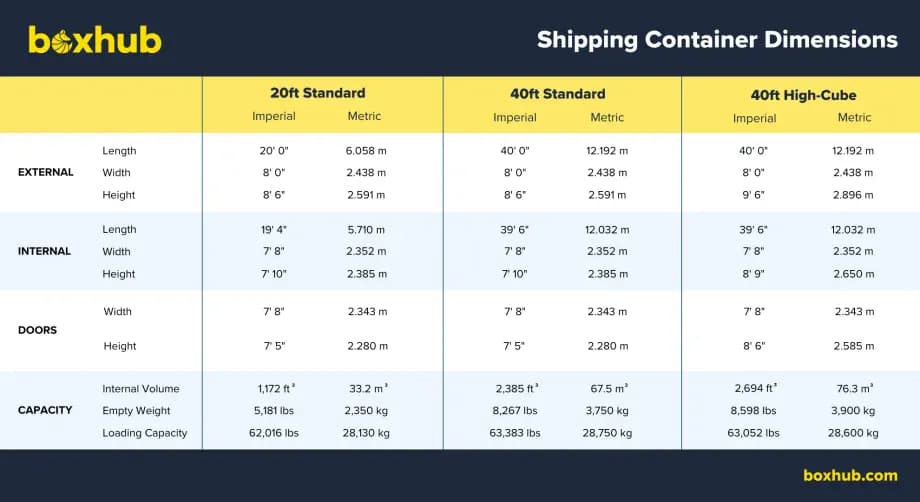
Need to compare container dimensions? Jump to our comparison table.
20ft Standard Shipping Container Dimensions
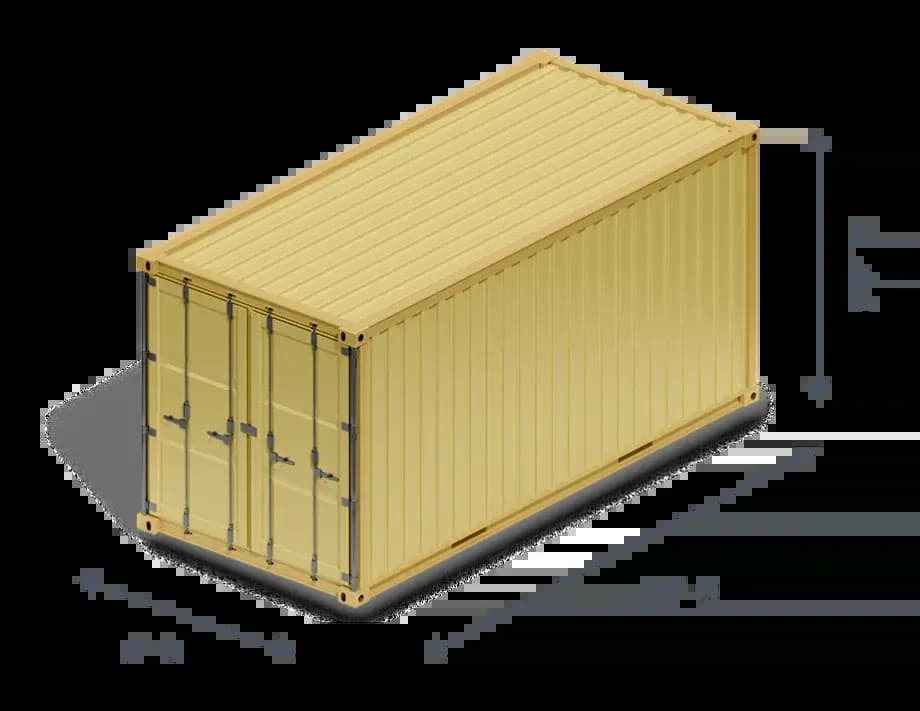
Twenty-foot standard shipping containers are among the industry’s most commonly used units. When retired from shipping, 20ft containers are regularly repurposed on construction sites to store machinery, as a cost-effective garage alternative to store vehicles, or even to store animal feed on farms. However, they can also be converted into workspaces, sheds, pop-up shops, swimming pools, mini mobile cafes… The list goes on!
A 20ft container’s internal volume is 1,172 ft3. That’s the equivalent of 200 standard mattresses, two compact cars, or 9,600 wine bottles. When empty, a 20ft standard container weighs around 2.3 tons. When loaded, the maximum weight capacity for a 20ft container is often capped at 30 tons. This is important to keep in mind if you plan to store or transport cargo with your shipping container.
Because 20-foot standard containers are so prevalent in the shipping industry, their dimensions are used as a unit of measurement to determine cargo capacity for container ships and terminals. This unit of measurement is called TEU (twenty-foot equivalent unit).
| Specification | Measurement |
|---|---|
| External Dimensions | 20' L x 8' W x 8'6" H |
| Internal Dimensions | 19'4" L x 7'8" W x 7'10" H |
| Door | 7'8" W x 7'5" H |
| Weight (Empty) | 5,181 lbs |
| Loading Capacity | 62,016 lbs |
40ft Standard Shipping Container Dimensions
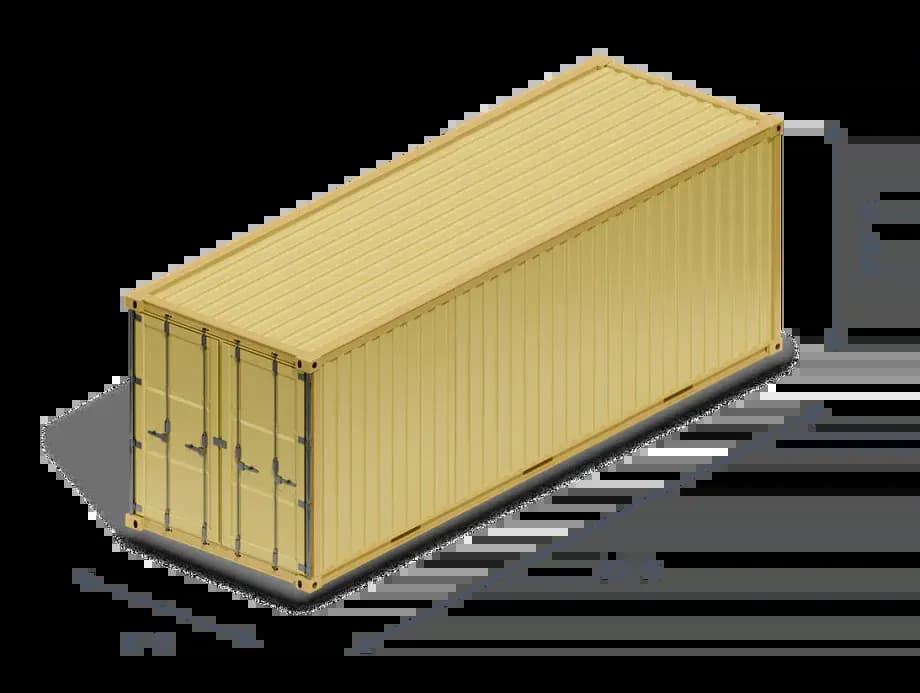
40-foot standard shipping containers are double the length and volume of their 20-foot counterparts. They have an internal square footage of about 320 square feet, making them best suited for storing or transporting bulkier objects such as retail inventory, electronics, and furniture. They’re also a great choice for moving houses, as a longer-term alternative to a rented storage unit, or building a modular home — especially when stacked or connected with other containers.
A 40ft container’s internal volume is 2,385 ft3. That’s the equivalent of 400 standard mattresses, four compact cars, or 19,200 wine bottles.
| Specification | Measurement |
|---|---|
| External Dimensions | 40' L x 8' W x 8'6" H |
| Internal Dimensions | 39'6" L x 7'8" W x 7'10" H |
| Door | 7'8" W x 7'5" H |
| Weight (Empty) | 8,267 lbs |
| Loading Capacity | 63,383 lbs |
High-Cube Container Dimensions
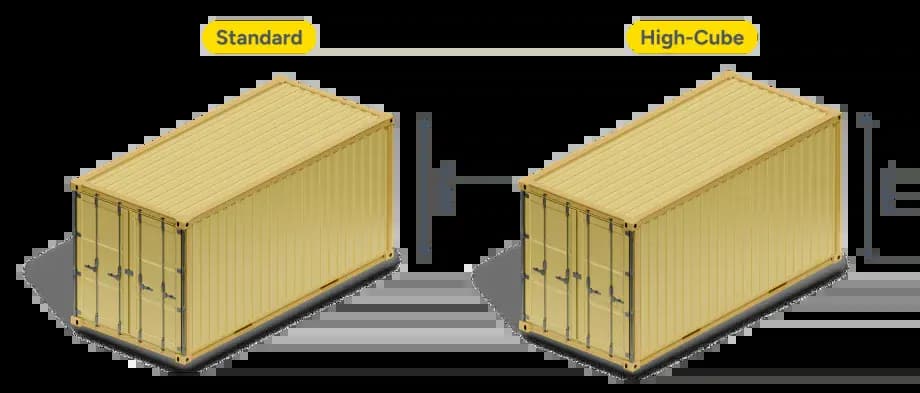
High-cube containers share the same characteristics as standard containers but have a height of 9’6″, which is one foot taller than standard containers. This extra height gives them a cube-like appearance when viewed from the front, hence the name "high-cube".
High-cubes are an especially popular choice for modular home projects, as the additional height can make even the tiniest home feel airy and spacious. Because of their extra height, 40ft high-cube containers are also useful for shipping light, bulky, or awkwardly shaped items.
Non-Standard Container Sizes
Shipping containers are also available in non-standard sizes such as 10ft, 45ft, and 53ft. However, these sizes are more expensive and can be more difficult to source when purchasing a container.
10ft Shipping Containers
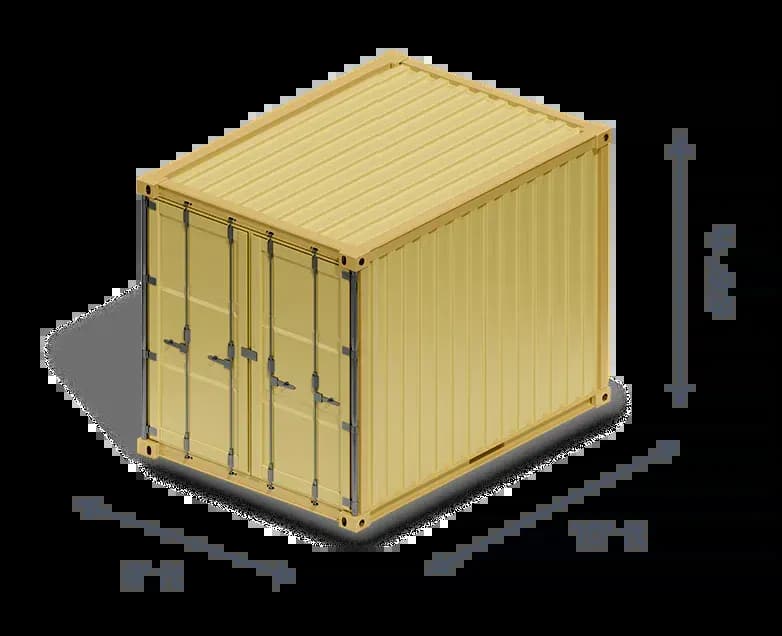
10ft shipping containers are commonly used as open offices, telecom shelters, and dock-level storage. They can also be used as ticket booths when modified with roll-up windows.
The internal volume of a 10ft shipping container is 561 ft³.
| Specification | Measurement |
|---|---|
| External Dimensions | 9' 9.75" L x 8' W x 8'6" H |
| Internal Dimensions | 9'3" L x 7'8" W x 7'10" H |
| Door | 7'8.5" W x 7'5.75" H |
| Weight (Empty) | 2,200 lbs |
| Loading Capacity | 7,341 lbs |
45ft Shipping Containers
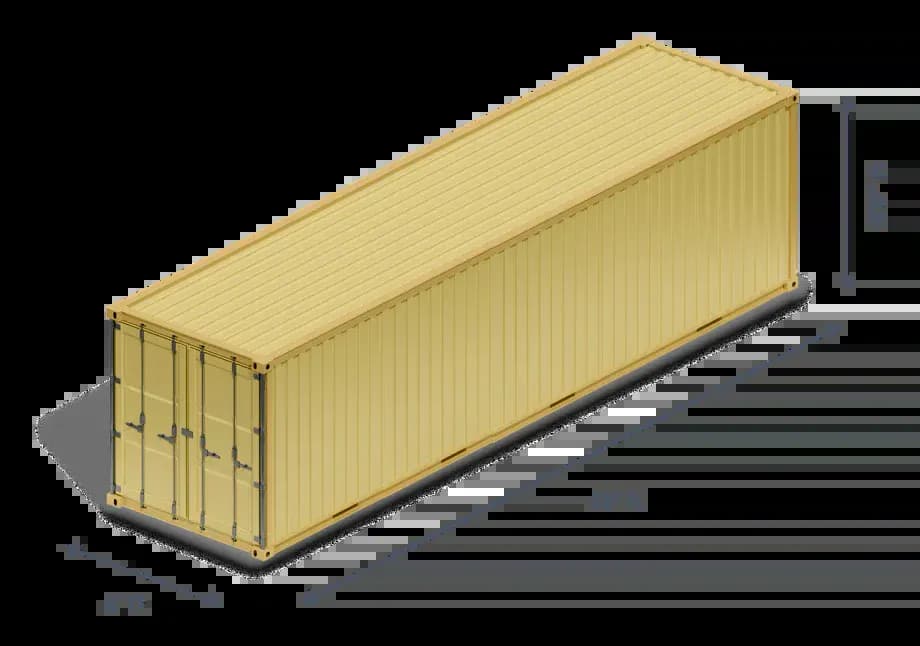
Five feet longer than their more common 40ft counterparts, 45ft shipping containers can be used for the same purposes and are ideal for those looking for a little more space and loading capacity. They’re great options for building container homes or for larger retail, food-and-beverage, or commercial projects.
The internal volume of a 45ft shipping container is 3040ft³.
| Specification | Measurement |
|---|---|
| External Dimensions | 45' L x 8' W x 9'6" H |
| Internal Dimensions | 44'6" L x 7'9" W x 8'10" H |
| Door | 7'8" W x 8'6" H |
| Weight (Empty) | 8,000 lbs |
| Loading Capacity | 66,139 lbs |
53ft Shipping Containers
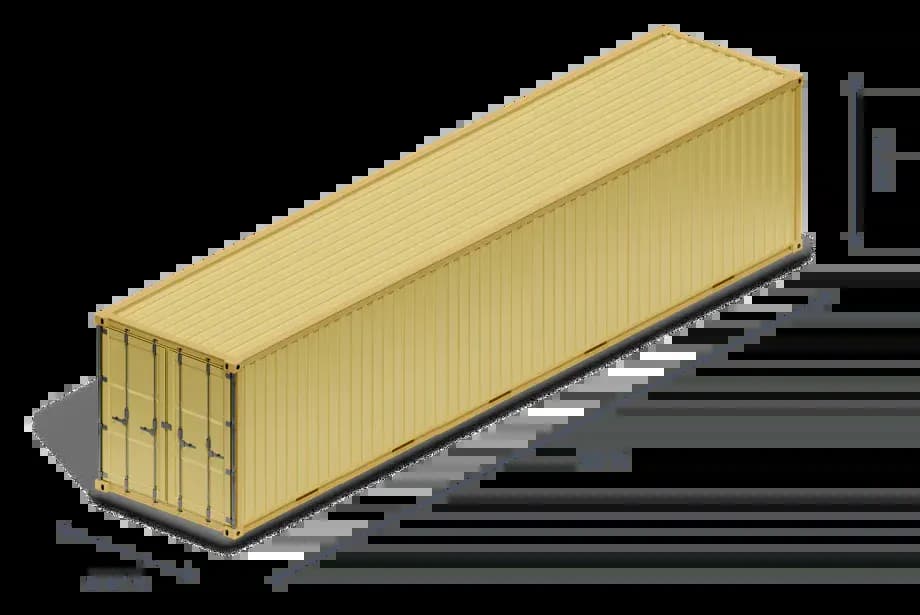
53ft shipping containers are the largest available container type and are ideal for container hotels, dorm rooms, or other multi-unit residential or commercial uses. They can also be used to build spacious container homes, as well as modular businesses ranging from restaurants to shops — even mobile hospitals. The internal volume of a 53ft shipping container is 3850 ft³.
| Specification | Measurement |
|---|---|
| External Dimensions | 53' L x 8'6" W x 9'6" H |
| Internal Dimensions | 52'6" L x 8'2" W x 8'10" H |
| Door | 8'2" W x 8'10" H |
| Weight (Empty) | 12,103 lbs |
| Loading Capacity | 72,917 lbs |
Tips for Choosing the Right Shipping Container
When you’re choosing a shipping container, consider a few factors. First, the size of the goods you plan to store or transport. Are they bulky or compact? Light or heavy? These factors will directly affect the type and size of the container you need.
Another factor to consider is how much cargo you plan to store or transport with your container. A large volume of goods may require a larger container, such as the 40ft standard or high-cube models. But a standard 20ft container might be ideal if your cargo is small and heavy.
Ultimately, choosing the right container will depend on your budget and how you plan to use your container. Whether you’re moving house, seeking storage space, or hoping to transform a container into a tiny home, farm, office, or storefront, we’re here to help you find the perfect unit.